All about terrazzo: history, types and interior applications
All about terrazzo: history, types and interior applications

Terrazzo, also known as granito in the Netherlands, is a unique type of material consisting of natural materials (such as marble, granite, and terracotta) mixed with cement or ceramic materials, which is then hardened and polished. The result is a recognizable speckled pattern that is both robust and decorative. Terrazzo has a rich history dating back to 15th-century Venice, where it originated as a clever way to reuse marble scraps for floors. Over time, terrazzo has evolved into a modern material used for surfaces ranging from traditional designs to those in pale and natural colors. Today, terrazzo is experiencing a true revival in contemporary interior design. Architects appreciate the material for its design flexibility, enormous range of colors, and durability. Whether it is a retro look or a modern aesthetic, terrazzo offers a unique texture and a traditional look with original design. In this blog article, we dive into terrazzo: where it comes from, how it has been used through the ages, the different types, and how you can apply terrazzo in your interior, from floors and stairs to kitchens and bathrooms. Finally, we discuss practical tips for installation and maintenance so that your terrazzo project lasts a lifetime.

What is Terrazzo?
Terrazzo is a composite material. A terrazzo floor or finish is made by mixing natural stone granules (often marble chips, but also granite, quartz, glass, and other materials) with a binder that hardens into a solid surface. Traditionally, that binder is cement, which is referred to as cement-bonded terrazzo, commonly known as granito. Nowadays, however, resin-bonded terrazzo also exists, where a synthetic resin (such as epoxy) binds the stone granules instead of cement. In either case, the surface is ground and polished after hardening, making the colors and patterns of the stone fragments visible.
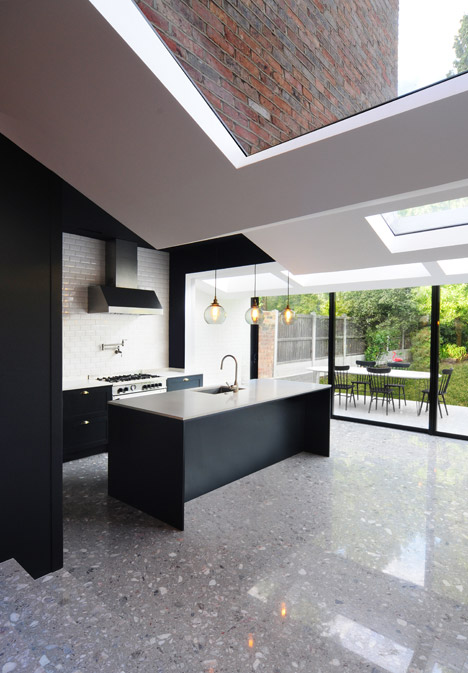
The Italian word “terrazzo” literally means “terrace,” referring to how the material was first used in the Veneto region. A common misconception is that terrazzo is simply concrete. Although terrazzo is bonded with cement and its installation resembles concrete, it contains genuine natural stone fragments that provide its characteristic speckled look. The term granito also sometimes causes confusion: granito is in fact a classic cement-bonded terrazzo often found in homes from the mid-20th century, for example in entrance halls and stairs. Granite and terrazzo are different materials; while the words are used interchangeably in Belgium and the Netherlands, terrazzo is the traditional term for the craft, while “terrazzo” often refers to modern variants.
Terrazzo is a natural product, or rather, it is a product composed of natural materials. It combines the best of two worlds: the natural beauty of stone and the strength of industrial materials. A good terrazzo is extremely durable and impact-resistant, often lasting for generations. However, cement-bonded terrazzo remains somewhat porous because cement has natural pores. Liquids such as red wine or lemon juice can cause stains if they are not removed in time. Therefore, natural terrazzo needs to be impregnated and maintained with mild, pH-neutral cleaning products (see the section on Installation and Maintenance). To clear up another misunderstanding: no, terrazzo is not solid granite; granite is a pure natural stone, while terrazzo is a composite product of many pieces of stone. Furthermore, the “terrazzo tiles” used in decoration are often ceramic tiles with a terrazzo-look print; while they are an alternative, they are not true terrazzo. Real terrazzo is recognized by its handmade character, seamless transitions, and the visible depth of the stone fragments in the surface.
Terrazzo through time
Terrazzo may be known as classic or “retro” in the 20th century, but the concept is millennia old. Even in antiquity, people used floors made of stone fragments in mortar, which we would now call terrazzo. Modern terrazzo as we know it, however, originated in 15th-century Venice. Venetian craftsmen noticed that the marble scraps left over from sculptures and stonemasonry could serve beautifully as floor coverings on the terraces around their houses. They pressed the bits of marble into clay or lime mortar and let people walk over them until the floor became naturally polished and the colors of the stone fragments became visible. The story goes that goat’s milk was initially used to make the marble pieces shine more—a charming detail from the early days of terrazzo. This technique was soon refined: floors began to be ground and polished mechanically for a smoother result, and the clay or lime layer was replaced by stronger Portland cement as it became available.
Spread and Heyday: From Venice, the terrazzo technique spread throughout Italy and beyond. From the 17th to the 18th century, many beautiful terrazzo floors were installed in Italian palaces and villas. In the 19th century, the trend moved to Belgium and the Netherlands, where it was embraced by the bourgeoisie for public buildings and homes. Many Italian craftsmen, particularly from the Friuli region, specialized in laying and polishing terrazzo. Until the first half of the 20th century, terrazzo was a status symbol: think of the granito floors in Art Deco homes, monumental staircases, school buildings, and cinemas. Many Belgian and Dutch porch floors, kitchens, and stairwells from the years 1920–1950 are lined with characteristic black-and-white or brightly speckled terrazzo.
Decline and Revival: After the Second World War, the popularity of terrazzo declined. New materials (such as ceramic tiles and synthetic floorings) were cheaper and easier to process. Terrazzo was seen as a pre-war product; many specialized workshops closed their doors, and valuable artisanal knowledge was in danger of being lost. But the tide has turned. From the end of the 20th century, terrazzo experienced a comeback, especially in commercial and public projects. In the US, resin-bonded terrazzo became popular under the name “solid surface,” and in Europe, architects began to rediscover the material.

Technological innovations played a part: by replacing cement with epoxy resin, terrazzo floors could be created without shrinkage cracks, in striking new colors, and in much larger, seamless surfaces. Examples of this can be found in the station hall (IJ-hal) of Amsterdam Centraal and the Delft station, both featuring modern terrazzo constructions.
In current interior design, terrazzo is completely back. We see it not only on floors but also in furniture, decorations, and accessories. Yet authentic terrazzo, whether traditionally cement-bonded or hyper-modern resin-bonded, remains unique. It combines nostalgia with a fresh, playful look that fits perfectly in contemporary interiors. From trendy coffee bars to minimalist loft apartments: terrazzo adds a touch of artistic texture and durability that other materials find difficult to match.
In current interior design, terrazzo is completely back. We see it not only on floors but also in furniture, decorations, and accessories. Yet authentic terrazzo, whether traditionally cement-bonded or hyper-modern resin-bonded, remains unique. It combines nostalgia with a fresh, playful look that fits perfectly in contemporary interiors. From trendy coffee bars to minimalist loft apartments: terrazzo adds a touch of artistic texture and durability that other materials find difficult to match.
Types of terrazzo

Terrazzo is a broad concept and consists of different compositions and methods. We distinguish between cement-bonded versus resin-bonded terrazzo, and between floors cast on-site (in situ) and prefab elements (tiles or slabs). Additionally, terrazzo products vary in grain size, color composition, and finish. We list the most important ones:
Cement-bonded terrazzo (traditional terrazzo)
This is the classic terrazzo that has been used for over a century. In cement-bonded terrazzo, white or gray Portland cement and water serve as a binder to anchor the stone granules into a hard stone mass. The mixture, consisting of cement, pigments, and stone aggregates, is poured on location or cast into molds in a factory, and ground to a smooth finish after hardening. Cement-bonded terrazzo is authentic, natural, and is also referred to as granito.
Characteristics of traditional terrazzo include its high mass and thickness: a terrazzo floor cast in situ in cement is usually ~2 cm thick (plus an underlying screed) and weighs about 25 to 30 kg per square meter. It is a solid material that must be placed on a stable surface. Cement-bonded terrazzo is very durable and suitable for intensive use for decades, but the cement matrix is somewhat porous and can absorb stains if not treated. This is solved by impregnating the floor (saturating it with a protective sealer) so that moisture and dirt have less chance to penetrate (more on this under Maintenance).
An advantage of traditional terrazzo is artisanal freedom: a craftsman can lay patterns on-site using different colors of stone and metal divider strips, resulting in beautiful mosaic floors. Classic “Venetian terrazzo” is characterized by relatively large marble fragments that are visible here and there in the surface, giving a rich, irregular pattern. Cement-bonded terrazzo can be applied in situ or as tiles or slabs. Stone NV offers two options from the Bomarbre Classic collection, which are terrazzo tiles and slabs with medium-sized grains (up to 25 mm) suitable for floors, walls, stairs, and custom work. Also available are Bomarbre XXL marble slabs with cement-bonded terrazzo: these are large terrazzo slabs cast in blocks in the factory and then sawn into custom slabs. These use high-quality white cement and marble granulate, and their large format is ideal for large surfaces such as kitchen countertops. In the workshop of Stone NV, these XXL slabs are finished into custom pieces. Finally, there is Bomarbre Compact, an innovative cement-bonded terrazzo tile manufactured via vibration pressing under vacuum (vibro-compaction). This creates a very dense tile that is exceptionally resistant to pressure, stains, wear, and even frost and UV light. Bomarbre Compact tiles are produced with various types of aggregate (marble, granite, quartz, pebbles) and delivered sawn to size and calibrated, in finishes ranging from high-gloss polished to anti-slip brushed or sandblasted. These tiles combine the charm of traditional terrazzo with the technical benefits of a modern industrially manufactured tile.
Resin-bonded terrazzo (epoxy or synthetic resin terrazzo)

In addition to cement as a binder, terrazzo can also be made with synthetic resin as a binder. In this case, it is called epoxy terrazzo, synthetic resin terrazzo, or simply resin-bonded terrazzo. This variant was developed in the second half of the 20th century and has since gained popularity, especially in commercial applications such as shopping centers, airports, and recently also residential interiors. The main difference is that the resin binder is much stronger and more flexible than cement. This allows for very large, seamless floor areas without expansion joints or cracks, which is more difficult with traditional cement floors. Resin-bonded terrazzo slabs and tiles can also be made thinner than cement products because the resin bonds very strongly and requires less material to hold the stones together. A typical epoxy terrazzo is only ~8–15 mm thick and is often poured onto an existing screed or even old tiles (with a primer interlayer for adhesion).
Stone NV categorizes its resin-bonded range under Bomarbre Marble-Resin and Bombar Quartz-Resin. Bomarbre Marble-Resin uses marble granules bonded with epoxy resins. This production process yields a terrazzo with a more intense color depth than cement-bonded variants because the transparent resin highlights the colors of the stones. Furthermore, the produced slabs and tiles can be thinner and larger in format without breaking, and they are particularly resistant to chemicals, a big plus for applications in kitchens or laboratories where acids or oils may be spilled.
The porosity of Marble-Resin terrazzo is very low (less than 0.3%), but the material is intended for indoor use. Bomarbre Quartz-Resin, on the other hand, uses quartz granules (quartz is one of the hardest minerals) in a synthetic resin matrix. This material consists of up to 95% quartz grains, supplemented with color pigments and binding resin. The result is a terrazzo product that is extremely hard and scratch-resistant, comparable to engineered quartz countertops, and also nearly insensitive to stains or moisture.
Resin-bonded terrazzo therefore offers the ultimate in performance: it is strong, thin, lightweight, non-porous, and can be made in very modern color shades that are difficult to achieve with cement (think of bright colors or pure white terrazzo without a cement film). The downside is that this technique is often more expensive and occurs in specialized production environments. Epoxy, as a chemical product, is also sometimes viewed critically regarding its environmental impact. However, there are recent developments, such as bio-based resins, that are making resin-bonded terrazzo increasingly sustainable.
Terrazzo: prefab tiles or in-situ poured floor?
Regardless of whether you choose cement or resin as a binder, terrazzo can be applied in two major ways: either via prefab elements (tiles, slabs, stair treads, etc., produced in a workshop or factory) or as a floor poured on-site (poured floor). Both approaches have their advantages and disadvantages:
- Prefab terrazzo (tiles and custom pieces): This means that the terrazzo is first manufactured in a controlled environment into a finished product, which is then installed on-site. These can be standard terrazzo tiles (such as Bomarbre Classic and Compact tiles from Stone NV) or custom-made pieces like countertops, stairs, and wall panels. The advantage of prefab terrazzo is the consistent quality and installation speed: the slabs or tiles are machine-ground and polished, so there is no dust or noise from grinding on-site. The finish is already done in the workshop, which shortens the installation time on-site. The disadvantage is that you will see joints, giving a less seamless effect than a poured floor. However, with minimal joints and matching grout, the visual impact can be minimized. Prefab terrazzo tiles are ideal for those who want the terrazzo look without the intensive process of an in-situ floor. They are also handy in renovations: for example, terrazzo tiles can be placed on top of an existing floor if the height allows.
- In situ cast terrazzo floor: This is the classic method where a craftsman prepares the terrazzo mixture on the construction site, pours it, and finishes it on location. The process generally proceeds as follows: on a stable, load-bearing substrate (usually a sand-cement screed or concrete), a bonding layer is first applied (e.g., an epoxy primer broadcast with sand for grip). Next, the pourable terrazzo mixture (cement, binder, granules, pigment) is spread by hand and leveled on the floor to the desired thickness, usually around 15 to 20 mm. When the initial mixture is hard, but still a bit "young," the mechanical finishing begins: the top layer is ground down by ~3-5 mm using a machine, revealing the internal pattern and color of the stone fragments. This artisanal grinding process requires expertise and patience but is crucial to your result. Finally, the floor is grouted (with a cement-based or resin grout, often in a matching color) so that possible pinholes or small gaps are filled, followed by a final polishing and impregnation.
A terrazzo floor is seamless and offers the aesthetic advantage of a continuous pattern without joints, as if the floor consists of a single piece of natural stone. One can also be creative by adding strips or patterns (for example, brass lines or inlay motifs) that become visible after polishing. Compared to prefabricated material, in situ terrazzo takes more time: the floor needs roughly 5 to 10 days for the entire process. Also, the floor must be given time to develop sufficient strength; usually, a terrazzo is fully load-bearing after about a week. During drying, cement terrazzo can shrink slightly; craftsmen limit crack formation by dividing large surfaces into sections (expansion joints of approx. 20 m²) or by using special low-shrinkage binders. Resin-bonded poured terrazzo floors have this problem less and can realize very large areas without joints. Please note that a good substrate is essential for a beautiful result. Terrazzo on the floor is a choice for durability and detail, where the floor flows perfectly into other materials.
Grain sizes and finish: Both prefab and cast terrazzo can be executed with different grain sizes, from extremely fine (terrazzo with specks of only a few millimeters, sometimes called "Mosaic Terrazzo") to very coarse (pieces of stone of several centimeters that give a dramatic effect). The grain size largely determines the appearance: fine-grained terrazzo looks more homogeneous and even, while coarse-grained terrazzo has a pronounced, artistic effect. Some mixtures even contain different fractions for a playful look. Regarding surface finish, there are options such as polished (glossy and smooth), honed (matte, silk gloss), or anti-slip treatments such as brushed or sandblasted. A polished terrazzo shows the full depth and color of the stones but can be somewhat slippery in wet conditions, while a matte or brushed terrazzo gives less reflection but is safer to walk on in a shower or outdoor environment. The choice therefore depends on taste and application.
Interior applications of terrazzo
One of the strengths of terrazzo is that the material is multi-functional. While it is most famous as a floor, you can use terrazzo for almost any part of your interior. Below are the most common applications:
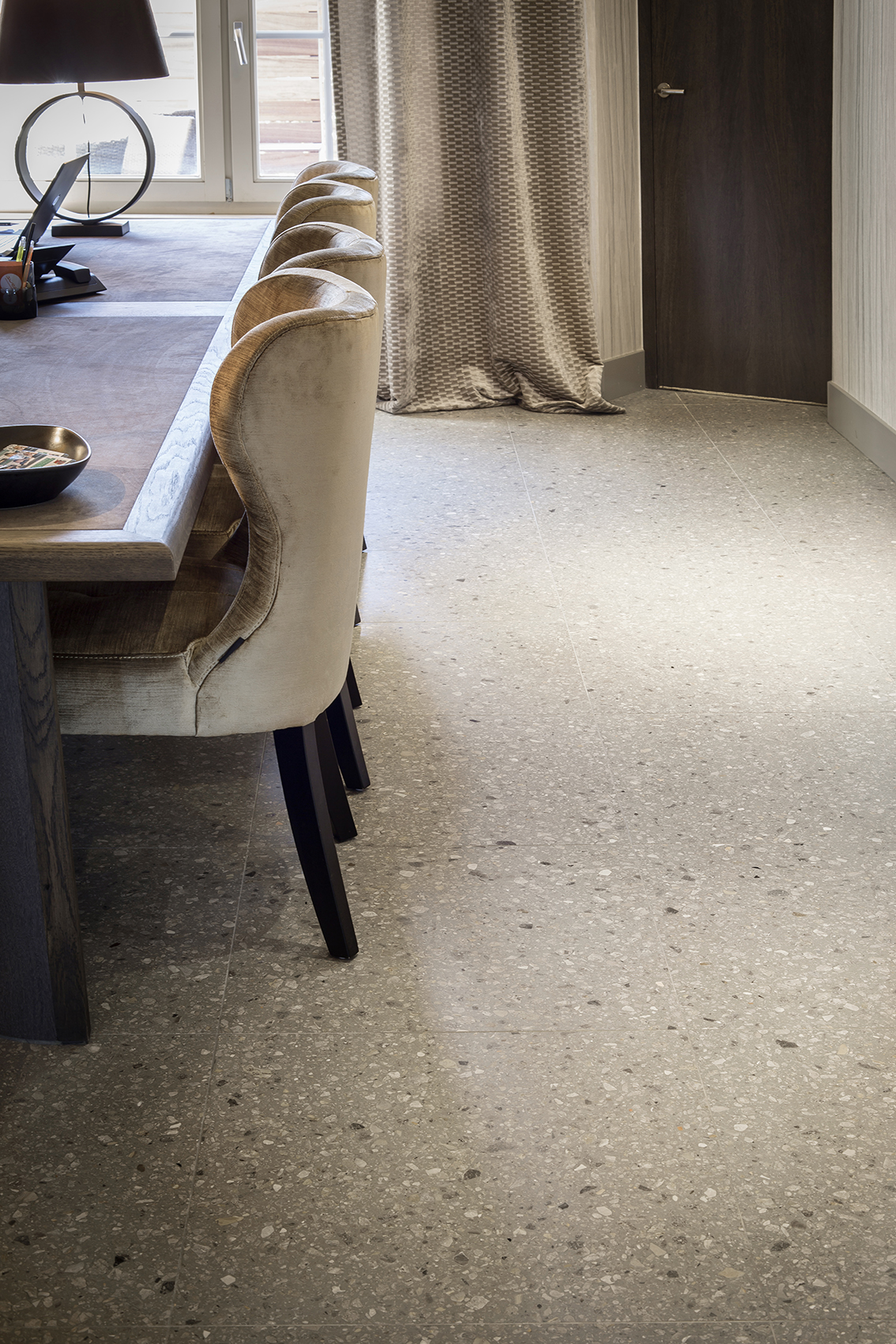
- Floors: The classic choice par excellence. The floor will be durable and impact-resistant. Whether you choose a poured-on-site floor or terrazzo tiles, the result is a high-quality solution. Terrazzo is suitable for almost every room in the house: from the entrance hall to the kitchen, living room, and bathroom. Thanks to its stone-like composition, terrazzo also conducts heat very well, making it a perfect match for underfloor heating—no cracks or heat loss, but pleasantly warm feet in the winter. When used in wet rooms (bathroom, shower), ensure you choose an appropriate finish (preferably matte or anti-slip) to prevent slipping. In commercial contexts (shops, offices), terrazzo is often used because it can be intensively used and is easy to maintain. However, there are some rules for cleaning to ensure it stays beautiful over time.
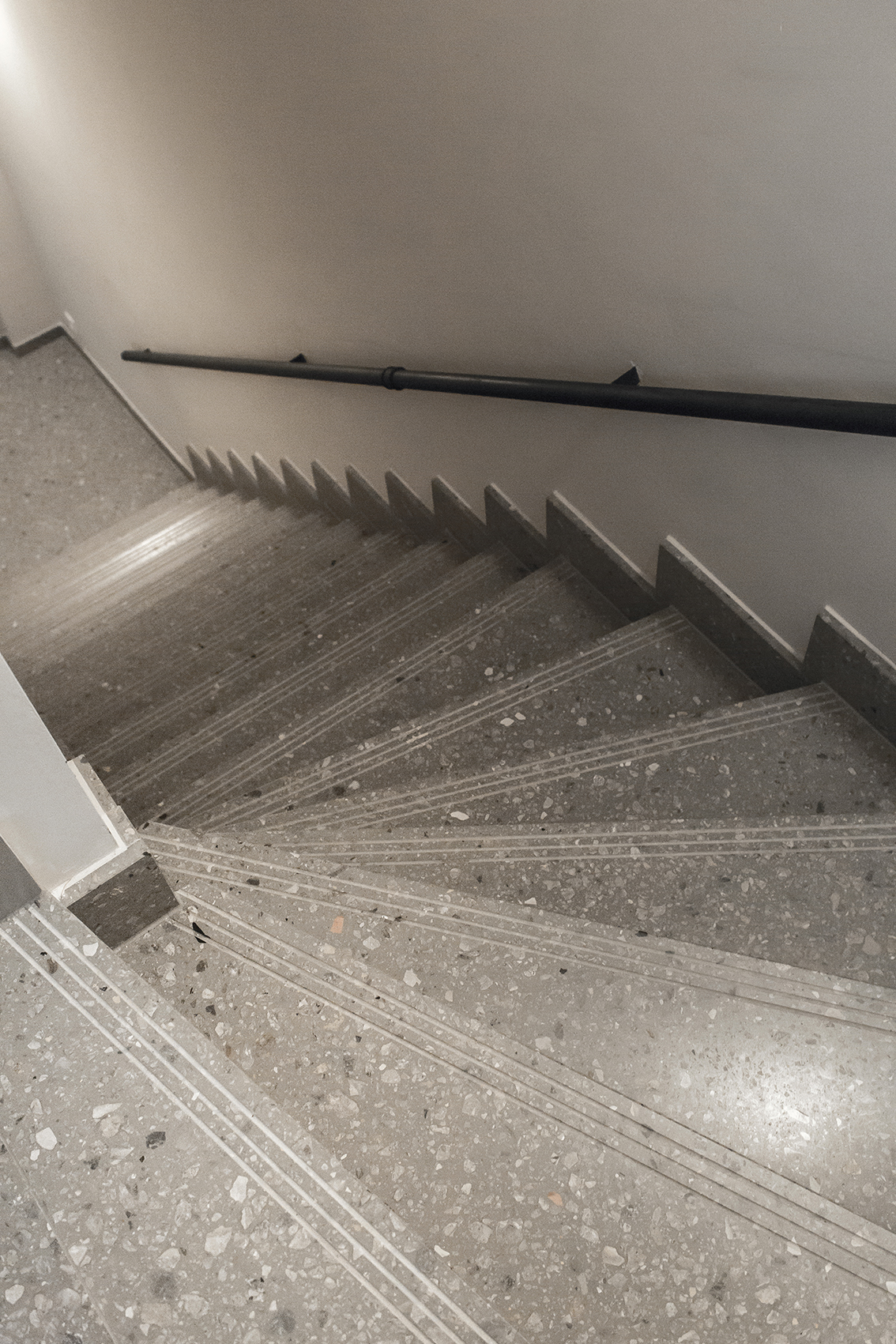
- Stairs: A terrazzo staircase radiates pure craftsmanship and solidity. After all, we see many granite stairs in Belgium that are more than 100 years old but are still in excellent state; they truly last a lifetime. Today, stairs can be clad with prefab terrazzo treads or cast on-site. At Stone NV, stair treads are custom-made in terrazzo, including risers and possible matching sills or window tablets. The result is a monolithic staircase where everything flows together. A practical advantage: terrazzo is wear-resistant and can easily handle the daily back-and-forth traffic. You can find extra grip by incorporating small anti-slip strips or by choosing a matte finish instead of high-gloss. A terrazzo staircase becomes a real eyecatcher in the interior, especially if the rest of the finish is sleek and simple.
- Wall decoration: Terrazzo on a wall? Certainly—think of shower walls, kitchen backsplashes, fireplace surrounds, or even full accent walls in residential or commercial spaces. Because terrazzo can be made in slab form (e.g., from Bomarbre), it gives a room an exclusive, luxury look. In bathrooms, terrazzo is used, for example, to clad walk-in showers or bathtub surrounds. The material is resistant to water (when treated with an impregnator) and is hygienically safe because it has few to no joints where dirt or mold can hide. A terrazzo wall is also impact-resistant—no fear of damage as with plaster or paint—and easy to maintain. However, the substrate must be strong enough to carry the weight of the slabs. Often, terrazzo wall slabs are applied in combination with a matching floor for a seamless whole, for example in wellness areas or designer bathrooms.
- Kitchen countertops and furniture: Terrazzo has found its way to the kitchen as a stylish alternative to natural stone or composite. A terrazzo countertop combines the best of two worlds: the unique, playful look of the specks and the functional advantages of a stone-like surface (heat-resistant and scratch-resistant). Resin-bonded terrazzo is popular for kitchen counters because it is non-porous and highly resistant to stains, such as the Bomarbre Quartz-Resin line. Cement-bonded terrazzo countertops are also possible: spills with wine or lemon should be wiped away quickly, and a regular impregnation is recommended to keep the surface stain-free. In the end, a terrazzo countertop is very personal. Every piece is unique and can be custom-colored to match your kitchen. Stone NV manufactures custom kitchen countertops in its own workshop, including precise cutouts for hobs and sinks. We also see terrazzo in furniture and decor: coffee tables, reception desks, even lamp bases in terrazzo are a new trend for those wanting to add a playful accent. The material fits perfectly with both retro and modern styles.
- Sanitary areas: In bathrooms and toilets, terrazzo floors and walls are highly appreciated. Terrazzo gives the bathroom the look of a luxury hotel, from the floor of the shower to the rest of the room. As mentioned before, one must ensure an anti-slip finish and proper waterproofing (impregnation). Because terrazzo handles moisture well when treated, it is also used for shower trays and sloping shower floors, complete with integrated drainage. Another popular item is a terrazzo vanity or washbasin, often executed in one continuous slab with the bathroom furniture. Such custom pieces can be fully manufactured in our workshop, so the vanity top and sink consist of the same material—a monolithic and water-resistant whole. Terrazzo feels natural and pleasant in warm bathrooms and does not feel cold to the touch. It is colorfast (does not discolor under UV light) and resistant to the daily use of soaps and shampoo. In other words: both in terms of look and hygiene, terrazzo scores very well in sanitary applications. Just be careful with aggressive cleaning agents (descalers, etc.)—ensure they are not too acidic, especially with lime-based terrazzo, to avoid dull spots.

In summary, terrazzo is an all-rounder in the interior. The material is not just functional; it is a decorative eye-catcher that fits into many popular designs. There is a huge variation in color, from neutral tones to vibrant mixes. Furthermore, using the same terrazzo material in different elements—for example, floor and stairs, or countertop and backsplash—creates a fine sense of unity in the design. It is no wonder terrazzo is used by interior architects as a material that "brings a room to life" with its playful patterns while still radiating a timeless class.
Installation and maintenance
Bringing a terrazzo project to a successful conclusion requires both the right materials and the right techniques. Whether it is the preparation of the substrate, the placing of tiles, or daily maintenance, these tips are essential for a terrazzo that stays beautiful. We split this into installation and maintenance:
Installation of terrazzo

Preparation and substrate: A correct installation begins with the substrate. This must be stable, load-bearing, and sufficiently flat. If you have a floor covering, this usually means a screed or a concrete structure; the substrate must be dry to minimize shrinkage. For walls, the substrate must also be solid (extra bracing, waterproof boards), and for countertops, the cabinets must be level. Also, for slabs over existing tiles, it is important that those old tiles are secure and crack-free; if so, you can pour terrazzo on top or glue new tiles using an appropriate primer.
Installing prefabricated terrazzo tiles/slabs: The laying of terrazzo tiles is in many ways similar to laying natural stone or ceramics. It is important to use a flexible, acid-free adhesive to handle the weight. When terrazzo tiles are finished with a polished top coat, it is possible to use a matching grout (cement product with latex/polymer additives) to fill the joints and stone fragments for a seamless look. Always check for different nuances between product batches; mixing tiles from different boxes ensures harmony. When cutting terrazzo tiles (e.g., for edges), water cooling is necessary to avoid burn marks. Once the tiles are set, the joints are filled with an appropriate grout, again acid-free. Ensure you wipe away excess grout immediately, as these agents can leave a haze. Once the grout is dry, a first cleaning and impregnation is wise to protect the floor before use.
Working with in situ cast terrazzo: Poured floors are best left to specialists. We described some steps in this process under "Types of Terrazzo." Some extra tips/errors to avoid: ensure a constant mixing ratio is maintained during pouring; color differences can arise if the mixture varies too much in water content or pigment. Work "wet-on-wet" at transitions between sections to avoid visible edges. The craftsman will often work with straightedges or profiles to guarantee the same thickness everywhere. During grinding, water cooling (wet grinding) is essential to limit dust and prevent burning the surface. The slurry is cleaned up in between steps. After coarse grinding, small pinholes may be visible; these are filled with a fine pasta (sometimes mixed with stone dust) to seal all pores. Then, one polishes to the desired gloss level. It is very important that the floor is fully cured before placing heavy loads or covering it—allow at least a week for cement-bonded terrazzo and several days for epoxy terrazzo. Do not cover a freshly polished floor with airtight materials immediately; the floor needs to breathe.
Tips: Always work clean and prevent dirt from coming into contact with the open pores of fresh terrazzo too early. A pre-sealer can be applied before grouting to help with cleanup. Always use high-quality materials, such as low-alkali cements. Pay attention to the transport and placement of heavy prefab pieces (like stair treads and countertops); terrazzo is strong but can crack with improper handling. Always support long slabs over their full length.
Terrazzo maintenance
One of the best properties of terrazzo is that, when properly placed and impregnated, it is relatively low-maintenance. With the right care, your terrazzo will retain its beauty for decades. Please note:
Daily and weekly cleaning: The most important rule: remove sand and grit as quickly as possible. Grit can cause scratches over time, especially on glossy polished terrazzo. Mop weekly (or as needed) with water and a pH-neutral cleaner. There are special products for natural terrazzo that clean mildly and smell great. Avoid all-purpose cleaners with acid (e.g., anti-limescale) or aggressive degreasers: these can attack the cement and make the gloss dull. Also, do not use scouring powders or abrasive sponges; let stubborn stains soak and then treat them with a soft brush.
Periodic maintenance and protection: Impregnate (seal) the terrazzo regularly to protect the material against stains and moisture. For cement-bonded terrazzo, this is crucial: cement is naturally porous and can absorb liquids. How often you need to impregnate depends on use; for example, a high-traffic kitchen every few years, while a rarely used room can wait much longer. Always choose a product suitable for the terrazzo type (cement or epoxy). Resin-bonded terrazzo needs sealing less often due to its dense structure, but a protective layer can still help against superficial scratches and discoloration. Occasionally check if water still beads on the surface; if not, re-impregnating is recommended.
Stains and cleaning: Although a well-treated terrazzo floor can handle a lot, the rule still applies: be quick. Liquids like red wine, coffee, and oil can penetrate if left for hours. If you have a stain that has moved in, there are specialized stain removers (like oil-absorbing pastes) that can draw the stain out. Avoid acidic agents on lime-based terrazzo (containing marble or limestone); lemon, vinegar, and even cola can leave dull etch marks. If you do have an acid stain, a light polishing paste can sometimes restore the shine. Green deposits on an outdoor terrazzo terrace (if the material is suitable for outdoors) can be removed with an algaecide or mild chlorine solution, followed by thorough rinsing. Avoid high-pressure washers: the hard jet can damage the cement matrix.

Polishing and repair: After years of intensive use, a terrazzo may lose some of its shine and show micro-scratches. The good news: terrazzo can be re-polished. A professional firm can mechanically grind and polish the surface again, making the floor look brand new—something impossible with vinyl or carpet that wears out. Small cracks in cement-bonded terrazzo (if they occur) are usually shrinkage cracks and are aesthetic. They can be filled with a matching color paste, making them almost invisible. Note: always follow the manufacturer's advice. If you have terrazzo tiles, ensure you know if they are pre-treated or if you need to apply a sealer yourself.
Finally: treat your terrazzo with love, but also without fear. It is made to last a long time, and a little patina can even contribute to its charm. With simple regularity—keeping it clean, timely protection, and mild cleaning—terrazzo stays beautiful. Don't forget that you can always contact specialists with questions. Stone NV has 100 years of experience in natural terrazzo and is ready with technical advice to keep your products in top condition. With the right care, terrazzo is a carefree housemate: it becomes more beautiful with the years and contributes to a healthy, stylish living environment.
Conclusion

Terrazzo is the best version of its traditional design. From Roman mosaics to Venetian palazzo floors and the Art Deco granito floors in our regions: every terrazzo floor tells a story of durability and craftsmanship. Today, we are rediscovering this material in modern forms, whether in a sleek loft, a cozy family home, or a chic restaurant. Its appeal lies in its unique aesthetics (no two terrazzo surfaces are the same) and its robust performance. Terrazzo is a good idea: it is a timeless choice that remains fashionable for generations.
Your interiors in Belgium and the Netherlands are elevated by high-quality terrazzo. We have the material you need, and it is not just any material; it is a long-term investment when you use terrazzo in your project. The material is essentially a form of recycling (stone chips are often reused) and lasts a lifetime, making it an ecologically responsible choice compared to less durable floor coverings. Additionally, terrazzo can be perfectly customized: color, grain, and finish can be tailored to your taste and project. The creativity you can express is limitless and results in very high-quality materials.
When your terrazzo is placed, it is an investment in a light structure suitable for your interior, equipped with modern technology. Naturally, it is important to work with an experienced specialist for such a project. Stone NV is a Belgian expert in natural terrazzo with long-term expertise, offering exclusive terrazzo collections (such as Bomarbre Classic).
Our craftsmen assist with both the creative design and the technical execution, ensuring your terrazzo is not only dazzlingly beautiful but also structurally durable and practical to maintain. From a small renovation to a large project: we ensure it is installed correctly.
Finally, terrazzo is durable in style and ideal for interiors in Belgium and the Netherlands, making it highly suitable for use. The material brings color, texture, and personality to every room, whether it is a living room, kitchen, bathroom, or public space. With the right composition, a professional installation, and a little love and maintenance, you create a unique environment that only gains more character with the years. Terrazzo is not just a trend; it is a solid choice for your interior. Let yourself be inspired by the possibilities of terrazzo and discover how this material can take your project to a higher level. Bring stone to life; that is the promise of terrazzo, and we at Stone NV are happy to help you on your way!
Ready for your own terrazzo project? Let our experts advise you! Contact us for a no-obligation consultation and discover the possibilities for your home.
FAQ (Frequently Asked Questions about Terrazzo)
What is the difference between terrazzo and granito?
Terrazzo and granito are essentially the same high-quality material. When people say granito, they usually mean the traditional cement-bonded terrazzo floor, which was frequently applied during the 20th century. Terrazzo is an older term (Italian for “terraces”) and is the overarching name for both traditional terrazzo and modern variants with new binders. In Belgium and the Netherlands, the terms are often used interchangeably, but while the technology is the same, terrazzo is the most widely recognized international name.
Can I use terrazzo in the bathroom?
Yes. Terrazzo is highly suitable for bathroom applications, including floors, walls, and even washbasins. It is important that the surface is properly impregnated against moisture and that you choose an anti-slip finish for the floor (for example, by having the floor finished in a matte or brushed texture instead of high-gloss polishing). This provides you with a water-resistant and safe bathroom floor or wall with a luxurious appearance.
Is terrazzo suitable for underfloor heating?
Certainly. Terrazzo conducts heat very well and is perfect for combination with underfloor heating. Because it is a stony mass, the floor retains heat for a long time and releases it evenly, resulting in a comfortable and warm floor. Note that for cement-bonded terrazzo, the heating must be brought up to temperature gradually (startup protocol) so the material can adjust without the risk of cracks.
How do I maintain terrazzo?
A terrazzo floor requires little maintenance once it has been treated. Daily cleaning consists of vacuuming or sweeping, and weekly mopping with water and a pH-neutral cleaner. Avoid acidic or abrasive cleaning agents, as these can damage the surface. Periodically (e.g., annually), you can mop the floor with a special stone soap that builds up a protective layer. Over time, it is wise to re-impregnate the floor for optimal protection. This keeps your terrazzo beautiful for decades.
Does terrazzo need to be impregnated?
Yes, in most cases it does. An impregnating agent (sealer) penetrates the terrazzo and makes the surface water- and dirt-repellent without changing its appearance. Especially cement-bonded terrazzo strongly benefits from being impregnated because cement is naturally porous. Resin-bonded terrazzo is already very dense, but even there, impregnation can provide extra protection. It is recommended to impregnate right after installation and repeat this every few years for lasting protection against stains.
Is terrazzo environmentally friendly and sustainable?
Terrazzo is an exceptionally sustainable choice. The material is extremely durable and wear-resistant; once installed, it can last for generations. Furthermore, terrazzo is often manufactured using recycled stone chips (residual material from quarries), which gives it an ecological character. While energy is required to produce cement or resin, the lifecycle is very favorable because terrazzo has such a long lifespan and does not require frequent replacement. With local production and the rise of sustainable binders (such as bio-based resins), terrazzo remains a very responsible choice for the future.