Belgian or Vietnamese bluestone: how to tell the difference
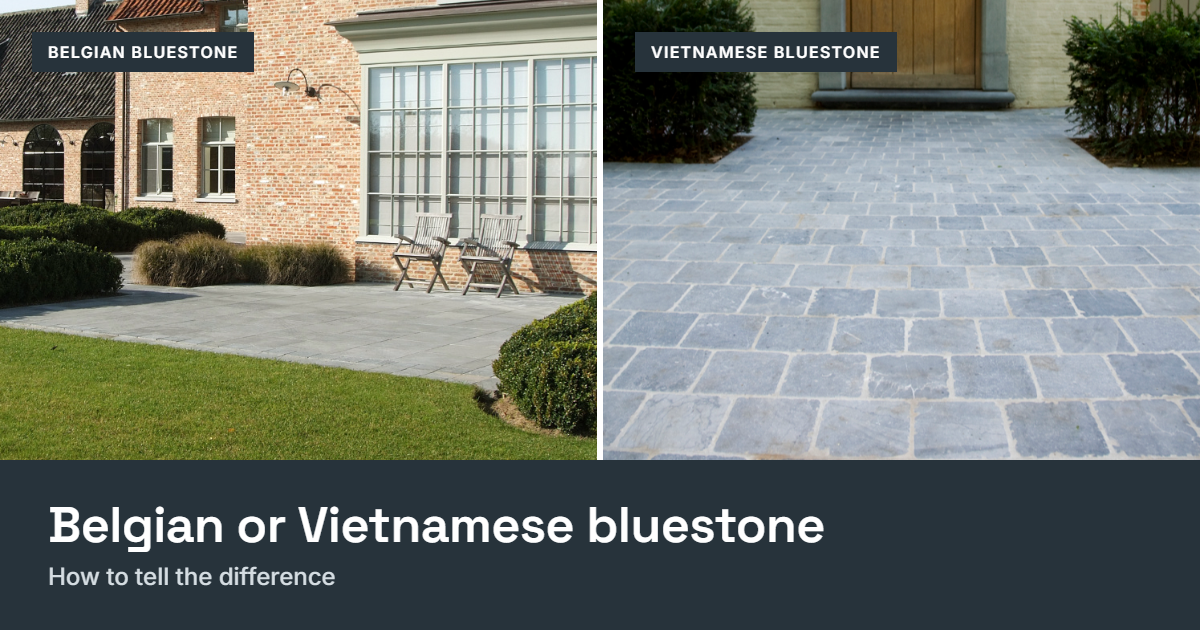
Anyone comparing quotes for a terrace, thresholds or a floor in bluestone soon notices big price differences. The explanation often lies in the origin: Belgian bluestone or Asian blue stone, usually from Vietnam or China. They look alike, but they are different stones. STONE NV supplies both, and in this guide explains how they differ, how to recognise the origin and when to choose which, for clients across Europe, the United States and the Middle East.
Short answer
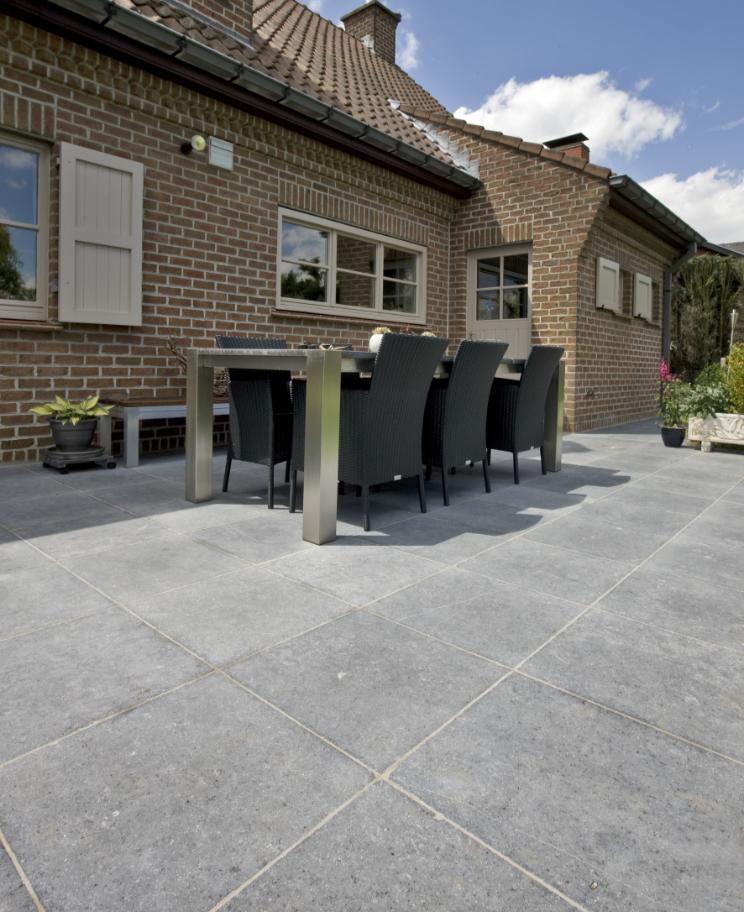
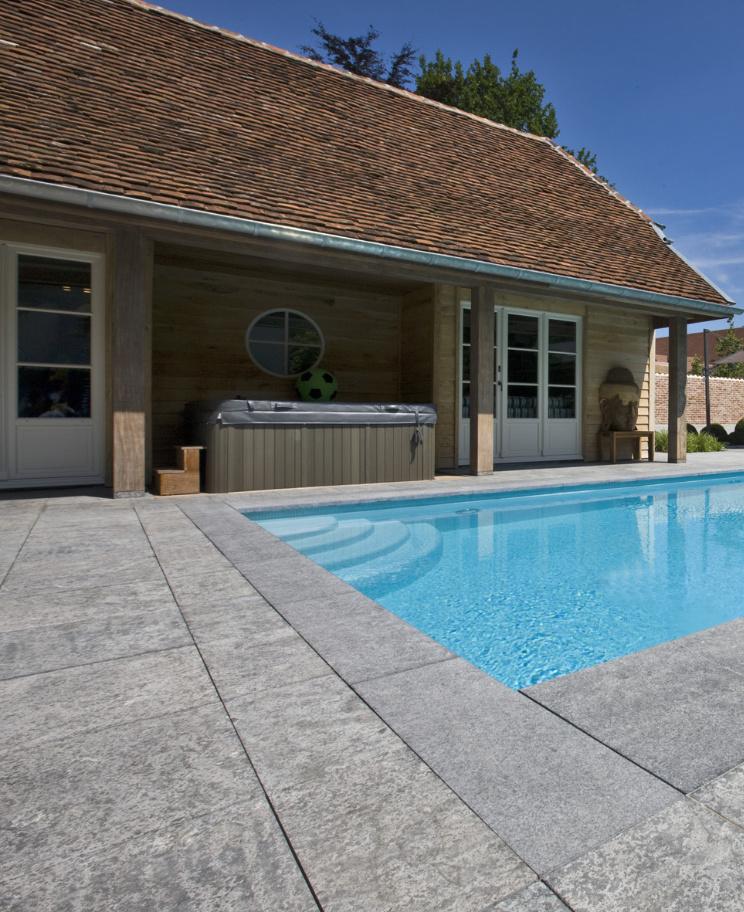
- Belgian bluestone is a hard, compact limestone from Wallonia, with a lively structure full of white fossils. It has been used for centuries, is frost-resistant and develops a lighter, natural patina outdoors.
- Vietnamese and Chinese blue stone is also limestone, but from Asia. It usually looks more uniform and is considerably more affordable. Its quality depends heavily on the quarry.
- If you want authenticity, heritage value and proven durability, Belgian bluestone is the benchmark. If you're after an even blue-grey look at a lower price, a well-selected Vietnamese limestone is a worthy alternative.
What is Belgian bluestone?
Belgian bluestone is a limestone that formed around 340 million years ago on the floor of a shallow sea. It is quarried in Wallonia, including in Hainaut and the Condroz, and is also known as petit granit or pierre bleue. Its hallmark is the white fossils of sea lilies (crinoids), which show up in the stone as tiny stars and discs. Discover all formats and finishes on our Belgian bluestone page.
Asian alternatives: Vietnamese and Chinese blue stone
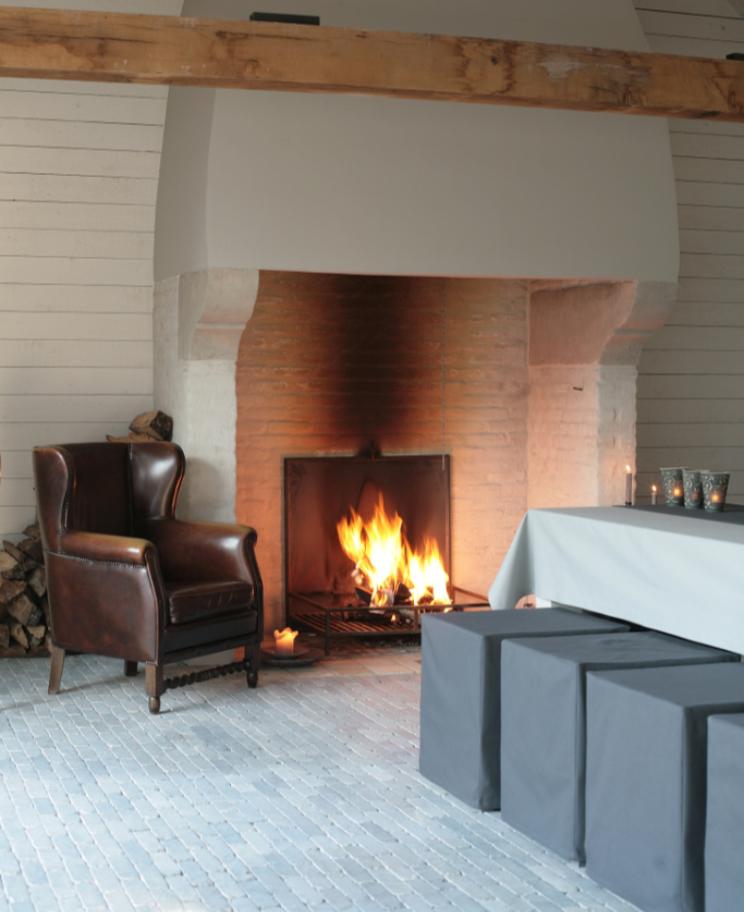
For several decades, blue-grey limestone has also been imported from Asia, mainly from Vietnam and China. This too is a natural limestone, but with a different geological origin and a different look. At STONE NV you'll find, for example, Ortis, a blue-grey Vietnamese limestone, as tiles and as tumbled cobbles. Ortis is part of our limestone range.
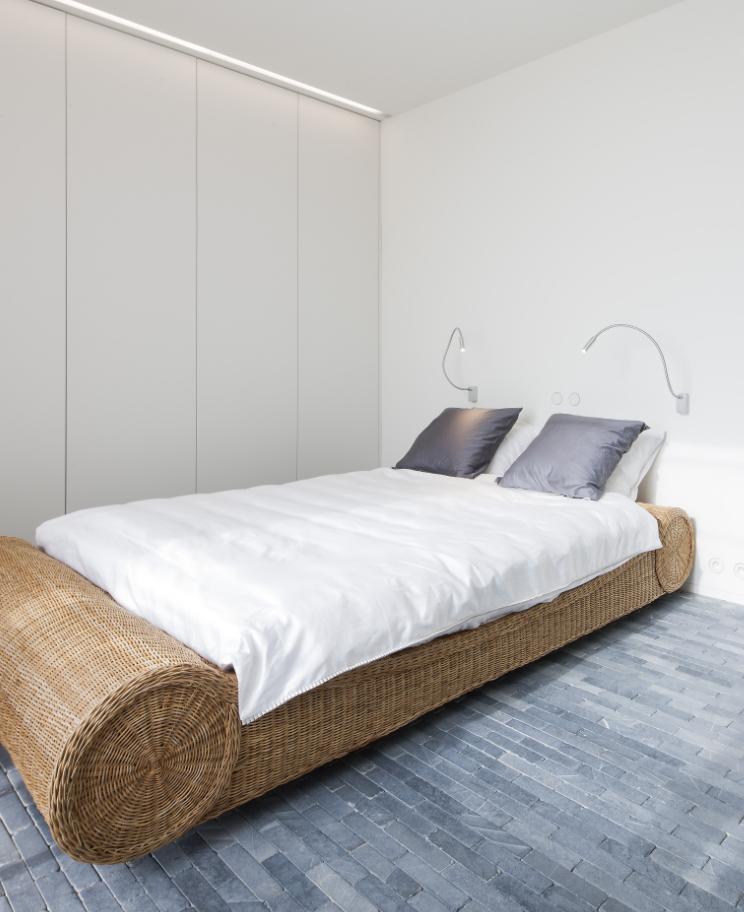
The differences side by side
- Origin: Belgian bluestone comes from Wallonia; Asian blue stone mainly from Vietnam and China.
- Look: Belgian bluestone has a lively structure with many white fossils; Asian stone is usually more uniform, with fewer fossils and sometimes white veins.
- Weathering: outdoors, Belgian bluestone gradually turns a lighter grey and develops a natural patina; Asian stone can change colour differently, depending on the quarry.
- Frost resistance: Belgian bluestone has a long, proven track record in a northern European climate; for Asian stone this varies by quarry, so always ask for the technical data sheet.
- Heritage: Belgian bluestone is usually specified for restoration and heritage projects.
- Price: Asian blue stone is usually considerably more affordable than Belgian bluestone.
How can you recognise the origin?
- Look at the fossils: many white sea-lily fossils, shaped like stars and discs, point to Belgian bluestone.
- Check how uniform it is: a very even, almost fossil-free surface points more to an Asian stone.
- Ask for the origin and the technical data sheet: a reliable supplier states the country and the quarry, and can demonstrate the technical properties.
- Compare samples side by side: in our showroom you can compare Belgian bluestone and Ortis in person.
When to choose which?
Choose Belgian bluestone for facades, thresholds, window sills and stairs that need to last for generations, for renovation and heritage work, and when you want its authentic, lively look. For a historic feel, our reclaimed Belgian bluestone cobbles are a beautiful choice too.
Choose a Vietnamese limestone such as Ortis for larger areas such as a terrace or an indoor floor, when you want an even blue-grey look on a smaller budget. Ask us for advice on the right thickness and finish for your application.
STONE NV is a member of the core group of the IMVO TruStone initiative, which promotes more socially responsible production of and trade in natural stone. Would you like to compare both stones? See our price list or request a sample.
Frequently asked questions about Belgian and Asian bluestone
What is the difference between Belgian and Chinese bluestone?
Both are blue-grey limestones, but with a different origin. Belgian bluestone comes from Wallonia, has a lively structure with many white fossils and a long track record in a northern European climate. Chinese blue stone is usually more uniform and more affordable, but its quality varies widely between quarries.
Is Vietnamese bluestone frost-resistant?
It depends on the quarry and the quality. Well-selected Vietnamese limestone is also used outdoors, for example as terrace tiles or cobbles. Always ask for the technical data sheet and choose the right thickness and installation for your application.
How can you recognise genuine Belgian bluestone?
By its many white sea-lily fossils, shaped like tiny stars and discs, and by its lively, never completely uniform structure. Always ask for the country of origin and the quarry as well.
Why is Belgian bluestone more expensive?
Belgian bluestone is quarried in smaller volumes and processed in Belgium, with higher labour and production costs. In return, you get proven quality, a shorter transport distance and an authentic look.
Does bluestone change colour outdoors?
Yes. Outdoors, under the influence of weather and sun, Belgian bluestone gradually turns a lighter grey. This is a natural process that belongs to the stone. Impregnation limits staining, but does not stop the natural patina.
How do I care for bluestone?
Bluestone is a limestone and therefore sensitive to acids: don't use vinegar or limescale removers, but a pH-neutral product, and impregnate after installation. Find more tips in our article on cleaning and caring for natural stone.